
Running a Sex Offender Check in King and Queen County
The Virginia Sex Offender and Crimes Against Minors Registry is the first official source for a King and Queen County search. Virginia Department of State Police manages that public system. The King and Queen County Sheriff's Office serves as the local registration contact, while VSP controls the online registry and statewide record. These roles should not be blended. A county office can address a local concern or suspected failure to register, but no verified local registry map or separate county list was found.
A public registry lookup is also different from a consent-based criminal record request. VSP's criminal record check instructions show the separate SP-167 route.
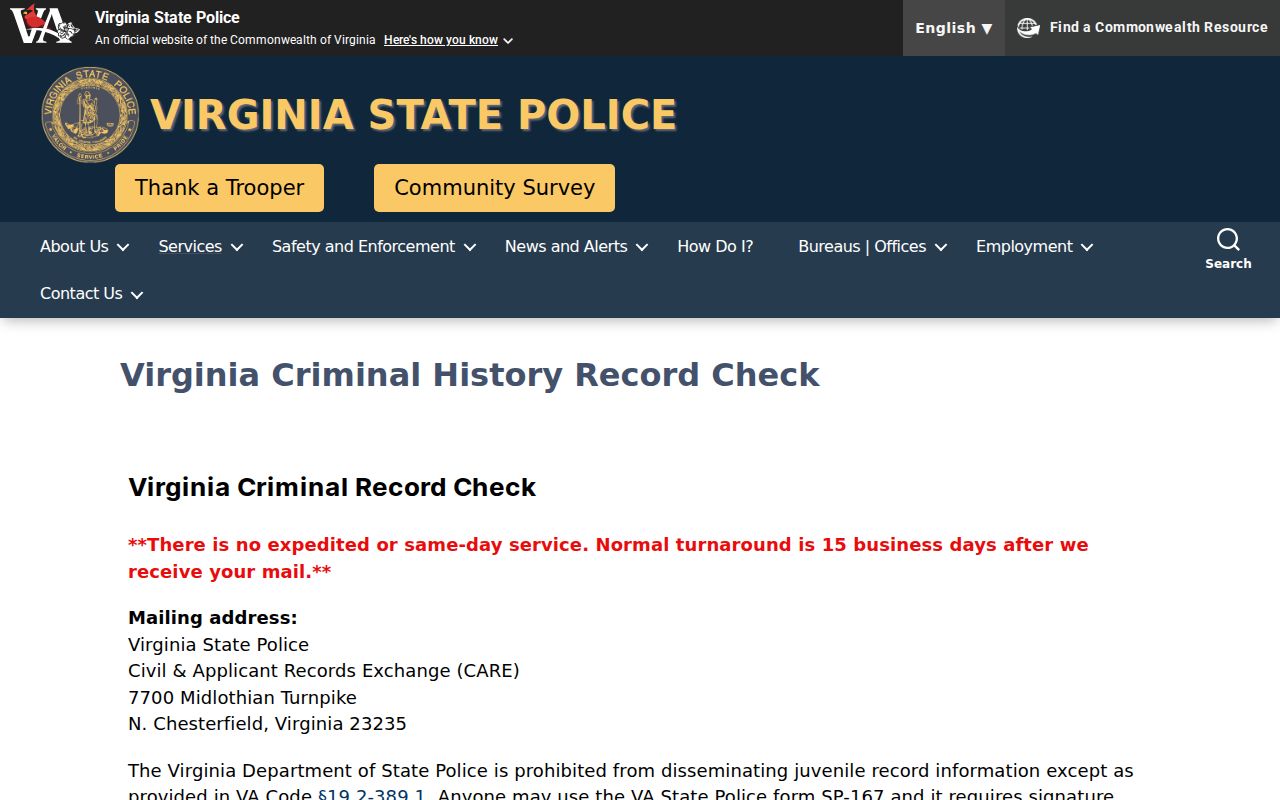
The captured VSP page helps keep those products straight: use the registry for public safety information, while SP-167 is a notarized, consent-based Virginia criminal-history process.
King and Queen County Registry Custodians
Two official offices divide the work. VSP's Registry Unit operates the Virginia database and can be reached at 804-674-2825 or sor@vsp.virginia.gov. The King and Queen County Sheriff's Office is the local point for registration and enforcement. Its physical office is at 242 Allens Circle, Suite A, King and Queen Court House, VA 23085. The operational number is 804-785-7400. Published local appointment hours and registry fees were not found, so call before going.
The county office directory confirms the Sheriff's location and contact route. Virginia law generally directs initial registration through local law enforcement within three days after release, a disposition without confinement, or establishment of Virginia residence. VSP then supplies the statewide public layer. King and Queen County has no incorporated towns, city police departments, or municipal registry offices to search.
King and Queen County Sheriff
242 Allens Circle, Suite A
King and Queen Court House, VA 23085
804-785-7400
Note: The Sheriff is the local registration contact, but VSP remains the source of the public Virginia registry record.
Searching the Virginia Sex Offender and Crimes Against Minors Registry
Start with the VSP registry link and read its conditions of use before relying on any result. During project research, that service timed out. Its exact field labels, required inputs, radius choices, buttons, map controls, and result layout could not be verified. They are not stated as facts here. When the service loads, use only the controls VSP actually presents, compare more than one identifier, and read the full public entry rather than drawing a conclusion from a name alone.
- Open the official VSP registry and review the live notice or conditions shown by VSP.
- Enter only the search details requested on the current form. Do not assume an address radius or county filter exists.
- Compare the returned public details carefully, especially when names are alike.
- Check offense, status, address, and update information that the current public profile actually displays.
The required search-field inventory is limited to what the research could verify. This prevents guessed controls from becoming false instructions.
| Field or Control | Type | Required | Verified Status |
|---|---|---|---|
| Exact VSP field labels | Unknown | Not verified | Portal timed out during inspection |
| Name inputs | Unknown | Not verified | Use only labels shown on the live form |
| Address, ZIP, or county inputs | Unknown | Not verified | No field or format is promised |
| Radius or map controls | Unknown | Not verified | No distance option was confirmed |
The VSP public record-check selector is a separate official service, pictured below.
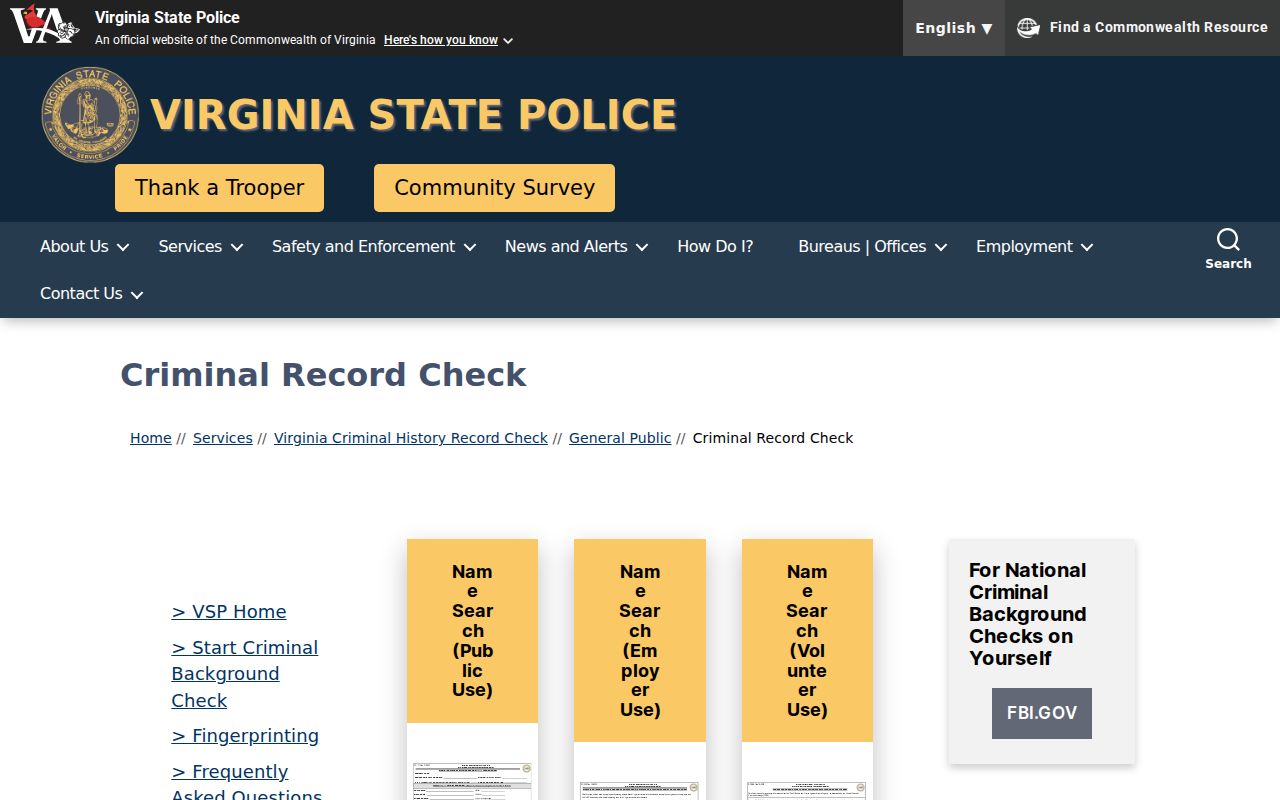
That selector does not substitute for the live registry and should not be used to infer the registry's unverified search fields.
King and Queen County Registry Fallbacks
If the Virginia portal does not load, move through a clear official chain. Search the U.S. Department of Justice's National Sex Offender Public Website, then contact the VSP Registry Unit, and finally call the King and Queen County Sheriff for a local registration or compliance question. NSOPW brings public data from participating jurisdictions into a national layer, which helps with cross-state checks. The Virginia profile remains the controlling state source for a Virginia registration record.
The DOJ's NSOPW search supplies the national fallback shown here.
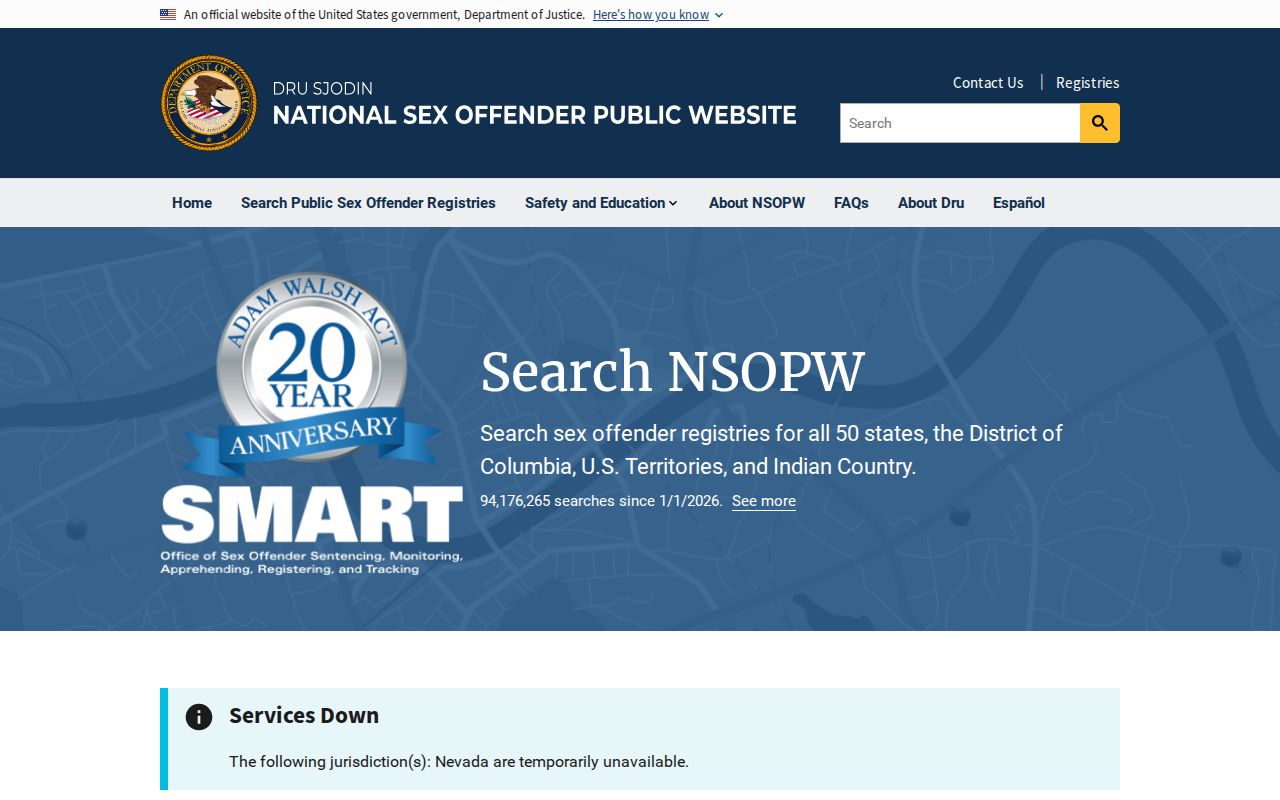
This official cross-state layer is useful when a person may have moved, but an empty result does not guarantee current physical presence or prove that no risk exists. For a suspected failure to register in King and Queen County, report facts to law enforcement. Do not confront the person.
When the concern involves a releasable local enforcement record rather than the public profile, the King and Queen County VFOIA channel is the records fallback. A records request cannot compel the Sheriff to create a registry answer or disclose exempt data.
What a Registry Profile Shows
Virginia Code § 9.1-903 lists information collected for registration. It includes names and aliases, conviction facts, fingerprints, a photo, date of birth, addresses, offense details, online identities, work details, and vehicle or other conveyance data. Some collected items, such as a Social Security number, are not a promise of public display. The public profile can be narrower than the data VSP and local law enforcement maintain.
| Name and aliases | Legal name, former names, and aliases are among the data collected. |
|---|---|
| Photo and description | A photo and identifying details support identity review; exact public fields were not verified. |
| Address information | Physical and mailing addresses are collected, while the current public display must be read as shown. |
| Offense information | Offense description plus conviction date and locality are part of statutory registration data. |
| Tier and duties | The tier controls verification frequency and affects ordinary removal eligibility. |
| Status and updates | Read only the status or update information the live public profile provides. |
A profile should be checked for identity and date context. It should not be treated as a signed court order, a full criminal record, or proof of a person's location at the moment of search. For a complete consenting Virginia history, SP-167 is the distinct state process.
VSP's official fingerprinting information illustrates another separate identity channel.
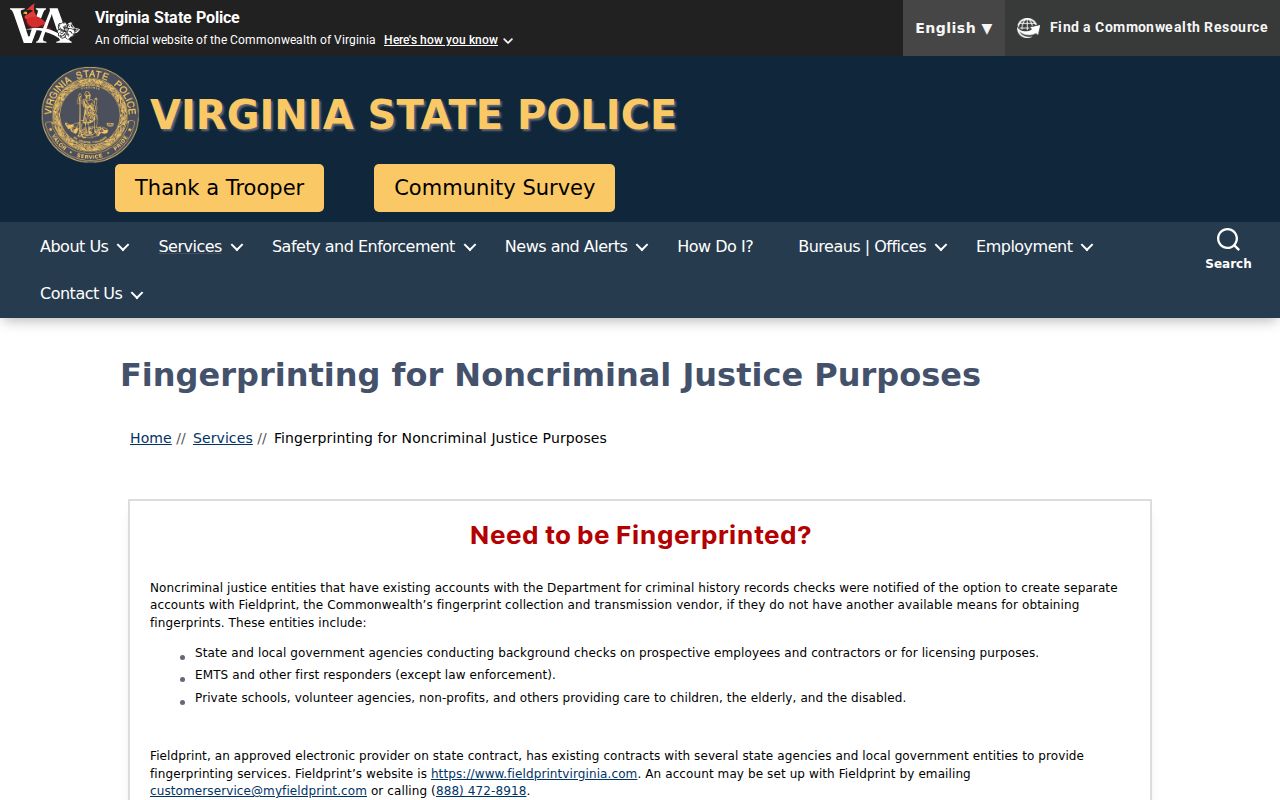
Fingerprints collected for registry administration or an authorized record process do not turn a public King and Queen County registry search into a fingerprint-based identity check.
King and Queen County Registry Limits
A tier is a legal classification tied to duties and time periods. It is not a custom prediction that a person will offend again. The same caution applies to location data. A reported address and an update date help frame the record, yet they do not prove where someone stands now. Geographic results also depend on the details entered and the registry data available when the search runs.
Presence and absence both have limits. A King and Queen County result can support a family safety plan, but it should be used with normal precautions and current official information. A no-hit is not a guarantee that no safety concern exists. If a detail looks wrong, contact VSP or the Sheriff rather than republishing it. For the underlying conviction and sentence, the court file is the more direct source.
Note: Statutory collection and public display are different, so never assume every item gathered under Virginia law appears online.
Registration Requirements and Levels in Virginia
Virginia ties verification frequency and ordinary removal rules to tier and offense history. Tier I and Tier II registrants generally verify each year, including during the birth month. Tier III and specified lifetime categories verify four times each year at three-month intervals. A Tier I or II person with a conviction under § 18.2-472.1 follows an enhanced twice-yearly rule. These schedules describe reporting duties, not the timing of public website updates.
| Level or Tier | Duration or Removal Point | Verification Frequency |
|---|---|---|
| Tier I | A single Tier I offense may support a petition after 15 years, subject to all requirements | Annually, including the birth month |
| Tier II | A single Tier II offense may support a petition after 25 years | Annually, including the birth month |
| Tier III and qualifying lifetime categories | Life, with no ordinary removal | Four times yearly at three-month intervals |
| Tier I or II with § 18.2-472.1 conviction | Underlying tier and offense rules still apply | Twice yearly |
Initial registration generally occurs through local law enforcement within three days of the triggering release, no-confinement disposition, or move into Virginia. Changes and verification duties continue under the statute. Exact King and Queen County check-in procedures, appointment hours, and any local fees were not published.
King and Queen County Registry Removal
Reaching 15 or 25 years is only a threshold for certain Tier I or Tier II petitions. Under Virginia Code § 9.1-910, a petitioner must also meet rules involving treatment or counseling, restitution, offense history, public safety, and a hearing. Two or more registration offenses block ordinary removal. Tier III and other lifetime categories do not receive that routine petition route. A denial generally brings a 24-month wait before another petition.
Registry removal is not the same as ordinary expungement. Relief tied to an acquittal, nolle prosequi, dismissal, or other qualifying result may affect an entry based solely on that matter, but it should never be generalized to a valid registry conviction. The King and Queen County Circuit Court and VSP perform different roles in any court-based process. Anyone assessing personal eligibility should use the current statute and official court process.
King and Queen County Registry Alerts
VSP form SP-285 supports notice for the same or a contiguous ZIP area. Registration and notification are separate. Registration is the person's legal duty to provide and update information. Public dissemination is VSP's authorized display, while SP-285 is a distinct notice route. Research did not verify an alert fee, so no cost should be assumed.
The VSP forms library is the official source for registry notification materials.
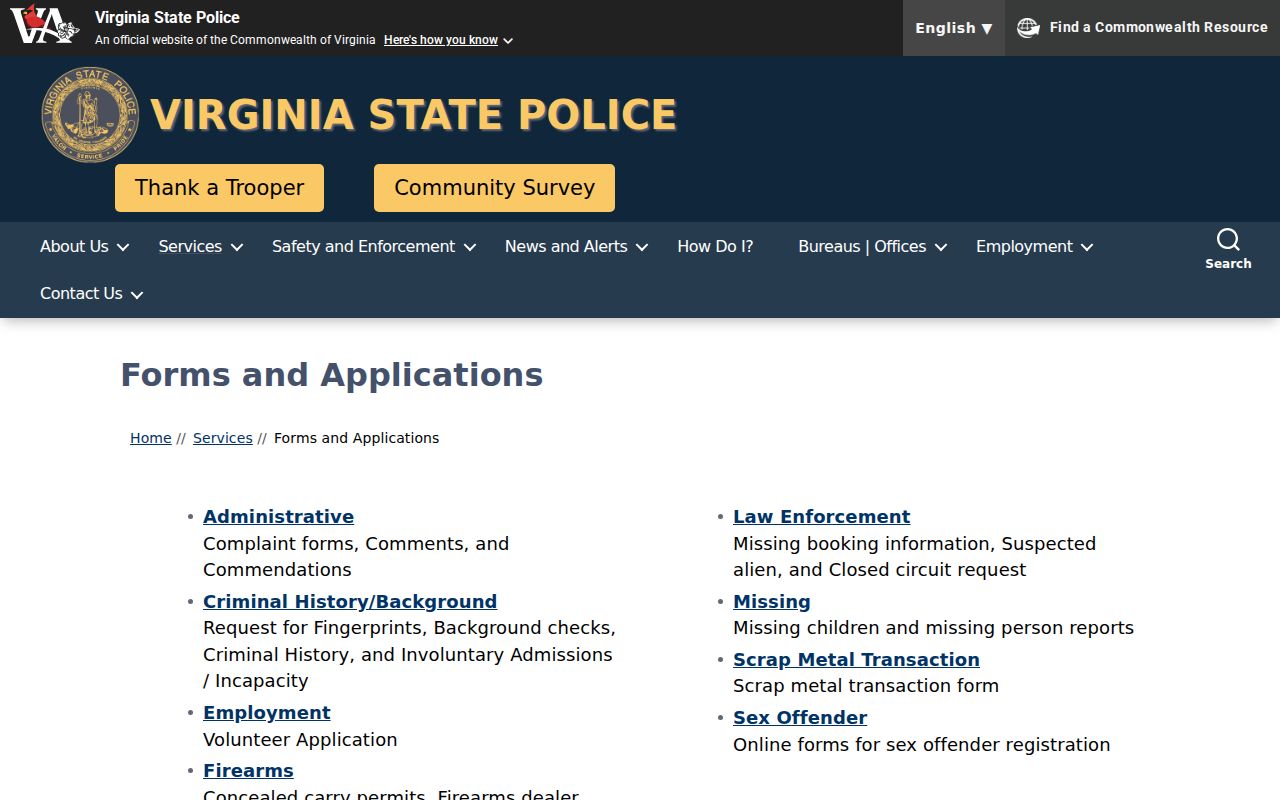
This neutral forms capture shows the proper notice channel without displaying or identifying a private registrant. Confirm the current form, instructions, service area, and any charge directly with VSP before submitting it.
Lawful Use and Community Notification
Registry information supports awareness and practical safety steps. It does not license a confrontation, a threat, public shaming, or vigilante action. If a King and Queen County resident suspects that someone failed to register or update required information, the safe response is to record the relevant facts and contact the Sheriff or VSP. Law enforcement can assess compliance through records that are not all open to the public.
Misuse is a crime: Virginia Code § 9.1-912 prohibits using registry information to intimidate or harass, and it provides criminal penalties for misuse.
Do not republish a profile as a warning campaign or treat a tier as a personal risk score. Use official notices, review dates and status with care, and report suspected noncompliance without direct contact. The registry is one part of a sound family or community safety plan, not a guarantee of danger or safety.